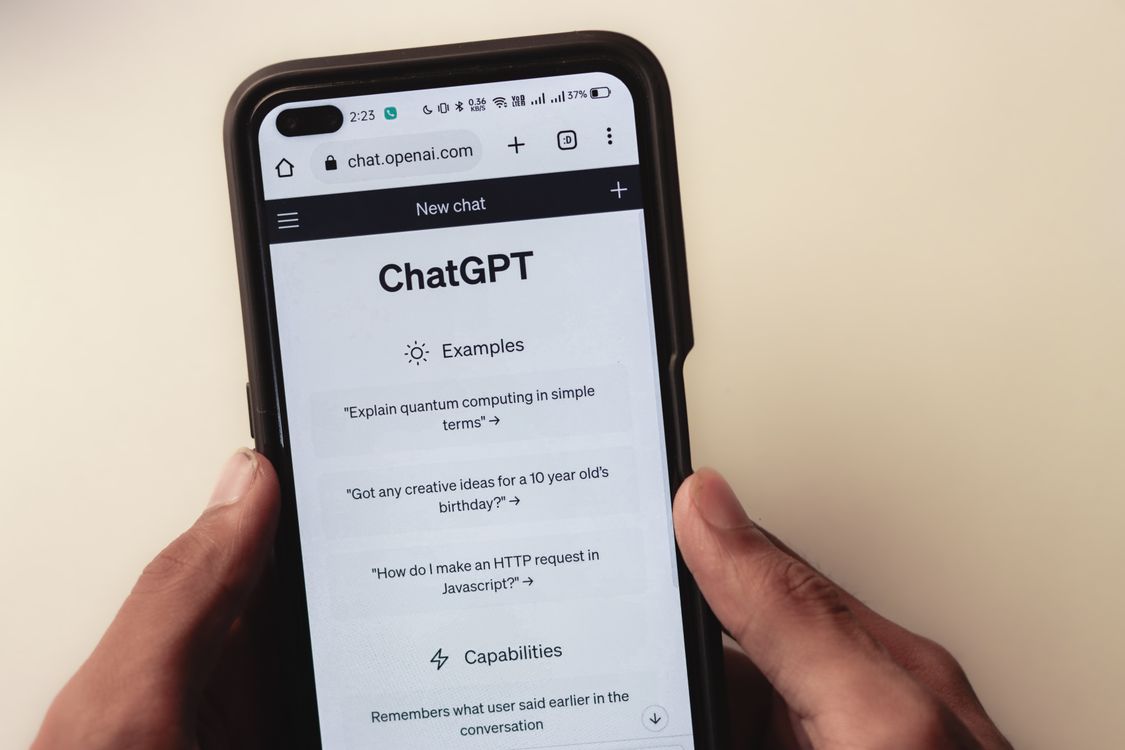
A client emailed me last month, confused. Her post on pricing strategy for service businesses had gone nowhere on Google for eight months. Then a friend asked ChatGPT a nearly identical question and her business got named in the answer. No click. No traffic. Just a citation, floating in someone else’s chat window.
She wanted to know if that was good or bad. Honestly? Both.
Here’s the thing nobody’s telling small business owners clearly enough: Google and AI answer engines are no longer scoring your content the same way. You can win one and lose the other. And in 2026, a growing share of your buyers are asking ChatGPT, Perplexity, or Gemini the question before they ever type it into Google.
Two Different Games, Two Different Scoreboards
Traditional SEO is a ranking game. You’re competing for one of ten blue links, and the tools of the trade are keywords, backlinks, and technical tuning. Win that game and someone clicks through to your site.
Generative Engine Optimization, or GEO, is a citation game. There’s no position ten. There’s just: did the AI mention you, or didn’t it. The engine reads dozens of sources, synthesizes an answer, and picks two to seven sites to credit. If you’re not one of them, you don’t exist in that conversation. Full stop.
Same content. Two completely different judges.
Why Your Post Can Win One and Lose the Other
Google still rewards pages built around keyword relevance, strong internal linking, and domain authority accumulated over time. It’s patient. It crawls, indexes, and ranks on its own schedule.
AI engines don’t browse like a patient reader. They extract. A generative engine scanning your pricing post isn’t slowly building trust in your domain over six months of crawl history. It’s grabbing a snapshot right now and asking: can I lift a clear, verifiable answer out of this page in the next three seconds?
If your post buries the actual answer under 400 words of throat-clearing before the “real” content starts, Google might still reward you for topical depth. The AI engine has already moved on to the next source.
That’s the gap my client fell into. Great post. Wrong structure for half its audience.
The Diagnostic: Run This on Your Own Blog
Before you touch a single word, figure out where you actually stand. Pull up three of your best-performing posts and ask these questions.
Does the core answer appear in the first two sentences of any section? Not eventually. Immediately. AI engines are grabbing “answer blocks,” not following your narrative arc.
Could a stranger quote your main claim in under 15 words? If it takes a paragraph to state your point, you’re optimized for a human reader’s patience, not an AI’s extraction speed.
Is there a date on it? Recency is a real signal now. A guide from 2024 with zero updates loses ground to a fresher post covering the same ground, even a weaker one.
Would an FAQ section on this topic be embarrassingly thin, or genuinely useful? If you can’t write five real questions a customer would type into a chat tool, the post probably isn’t structured around actual buyer intent yet.
Run those four checks on your top posts. Most small business blogs fail at least two.
What Actually Moves You From Invisible to Cited
Fix the structure first, not the volume. I’ve watched business owners respond to this problem by writing more content, faster, which usually just multiplies the same mistake.
Instead:
- Front-load the answer. Say the thing in the first two sentences of a section, then explain your reasoning after. Not before.
- Write in verifiable claims, not vague reassurance. “This cuts onboarding time by roughly a third” beats “this makes onboarding faster” every time. Specificity is what gets quoted.
- Add a real FAQ block. Five questions, phrased the way a person would actually ask them out loud. Answers in the 50 to 100 word range. This is one of the single highest-leverage moves you can make, and it takes an afternoon.
- Refresh instead of publish new. Update your best three posts with new numbers, a new example, and a visible “last updated” date before you write a fourth post from scratch.
- Cite your own sources. Original data, even something as small as “we surveyed 40 clients,” gives an AI engine a reason to trust and quote you instead of a generic competitor.
None of this requires a developer or a new content strategy from the ground up.
The Part Most Guides Skip
I’ll be blunt about something most GEO content won’t tell you: getting cited by an AI engine right now often means zero traffic. No click, no session, no conversion event in your analytics. Just a mention.
That’s frustrating if you’re used to measuring blogs purely by pageviews. But brand visibility inside a trusted answer, in front of someone actively deciding who to hire or buy from, has value even without the click. Treat it as a parallel channel worth building, not a replacement for the SEO work you’re already doing.
What to Do Now
Pick your single best-performing post this week. Not your favorite one, your best-performing one. Rewrite the opening two sentences of each section so the answer comes first. Add a five-question FAQ block at the bottom. Put a real date on it.
Then check back in six weeks and see if anything’s changed. You won’t always be able to tell. But you’ll have stopped writing purely for a reader’s patience and started writing for both judges at once, which is the only strategy that actually holds up in 2026.